For a standard flat pack container house, 50mm rock wool sandwich panels are a common starting specification. Buyers can also order 75mm or 100mm wall panels. The question is whether the additional thickness is worth the cost and transport space for a particular project.
A short-term construction site office in a mild climate may not need the same wall specification as a year-round worker dormitory in a cold region. The insulation material also matters: a 100mm rock wool panel and a 100mm polyurethane panel should not be treated as equivalent.
This guide compares 50mm, 75mm and 100mm wall panels used in container houses, including thermal performance, weight, packing quantities and procurement considerations.
A practical starting point for temporary site offices and cost-sensitive projects with modest insulation requirements.
More insulation than the standard 50mm option without moving directly to 100mm panels.
Additional insulation thickness for projects with higher thermal requirements, depending on the core material and building design.
50mm vs 75mm vs 100mm Wall Panels: What Is the Difference?
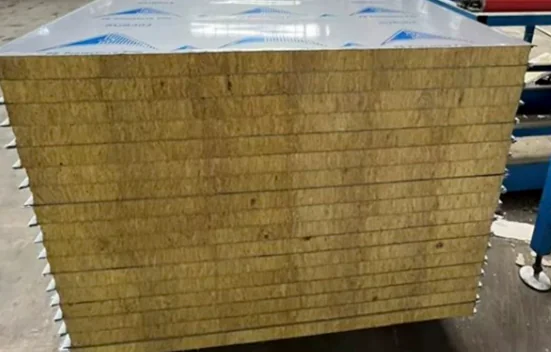
The three thicknesses look similar when viewed from the finished metal surface. The main difference is easier to see at the exposed edge: a thicker panel contains a deeper insulation core.
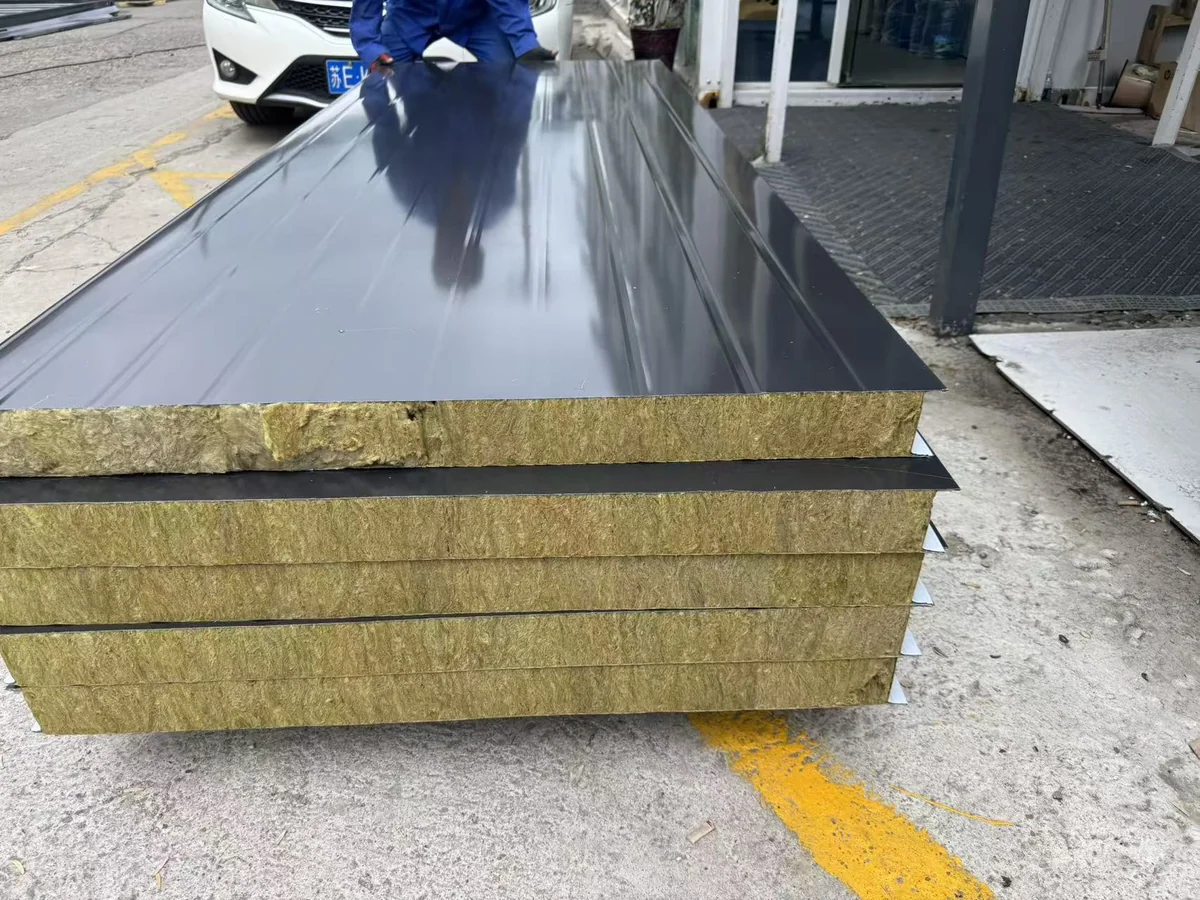
The photographs below show actual rock wool sandwich panels, rather than computer-generated cross-sections. The metal facings enclose the rock wool insulation core.
Standard insulation thickness commonly used in flat pack container house walls.
Intermediate thickness with 25mm more insulation core than the standard 50mm panel.
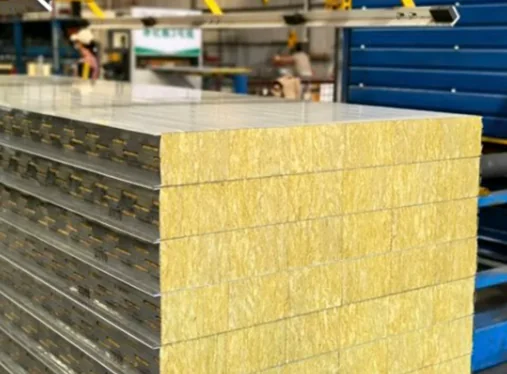
Thicker rock wool core for projects requiring greater insulation resistance.
Rock wool sandwich panel photographs supplied by Hongtai Container House. The images show actual panel materials; individual panel finishes and profiles may vary by specification.
| Item | 50mm | 75mm | 100mm |
|---|---|---|---|
| Wall Thickness | 50mm nominal | 75mm nominal | 100mm nominal |
| Typical Position | Standard | Intermediate upgrade | Thicker upgrade |
| Relative Core R-Value* | 1.0× | 1.5× | 2.0× |
| Relative Material Thickness | Baseline | 50% thicker | 100% thicker |
| Panel Cost | Lowest of the three, for comparable material | Higher than 50mm | Generally highest |
| Panel Weight | Lowest | Higher | Highest |
| Packing Volume | Standard reference | More space per panel | More space per panel |
| Typical Buying Situation | Temporary site office | Regularly occupied office or dormitory | Higher insulation demand |
*Relative R-values assume the same insulation core material and the same thermal conductivity. These are comparisons of the insulation core, not tested performance values for a complete wall.
How Much Better Is the Insulation with Thicker Panels?
For the same insulation material, thermal resistance increases with thickness. The basic calculation is straightforward:
R is expressed in m²·K/W. The calculation considers the insulation layer only.
Take an illustrative rock wool conductivity of 0.040 W/m·K. The three nominal thicknesses give the following core values.
| Thickness | Calculation | Core R-Value | Core Conductance |
|---|---|---|---|
| 50mm | 0.050 ÷ 0.040 | 1.25 m²·K/W | 0.80 W/m²·K |
| 75mm | 0.075 ÷ 0.040 | 1.88 m²·K/W | 0.53 W/m²·K |
| 100mm | 0.100 ÷ 0.040 | 2.50 m²·K/W | 0.40 W/m²·K |
On this basis, the 75mm core provides 50% more nominal thermal resistance than the 50mm core.
The 100mm core provides twice the nominal resistance of the 50mm version.
This does not mean that a container house with 100mm walls will use half the electricity for heating or cooling. The steel frame, windows, roof, floor, ventilation and air leakage also affect building performance.
Actual conductivity depends on the particular rock wool product. A project requiring a specific thermal performance should use the supplier’s declared values and the applicable wall-system test documentation.
Rock Wool vs PU: Why the Core Material Matters
Thickness is only one part of the wall-panel specification. Rock wool and polyurethane (PU) can have different thermal conductivity, density and fire performance.
A 100mm rock wool panel cannot automatically be considered equivalent to a 100mm PU panel. Buyers should compare the declared material properties.
| Item | Rock Wool | PU |
|---|---|---|
| Core Material | Mineral wool fibres | Rigid polyurethane foam |
| Thermal Performance | Depends on density, conductivity and thickness | Can provide greater resistance at the same thickness, depending on product specification |
| Fire Performance | Mineral wool core is commonly non-combustible; full panel assembly must be verified | Depends on foam formulation and tested assembly |
| Weight | Depends on core density and facing materials | Depends on foam density and facing materials |
| Procurement Documents | Core density, conductivity and fire-test documentation | Foam specification, conductivity and fire-test documentation |
Hongtai’s standard flat pack container house specification uses rock wool sandwich wall panels. PU panels can also be considered for suitable project requirements.
For cold-climate applications, 100mm or 150mm PU insulation may be included in the technical comparison, particularly when improved floor insulation is also needed.
Fire ratings should not be assumed from the insulation material name alone. If the project specifies a tested fire-resistance rating, it should be supported by the appropriate documentation for the complete assembly.
50mm Rock Wool Panels: Where They Make Sense
A 50mm rock wool wall panel is a common starting point for standard flat pack container houses.
It is often worth quoting first for temporary site offices, construction support rooms or projects with a relatively modest insulation requirement.
For regularly occupied rooms, the buyer should still check the expected weather conditions, roof insulation, windows and heating or cooling arrangements.
75mm Rock Wool Panels: The Intermediate Upgrade
Moving from 50mm to 75mm adds 25mm of insulation thickness. It can be a useful option for a worker dormitory or project office occupied over a longer period.
Whether the extra thickness is worthwhile depends on the upgrade price and the rest of the building envelope.
A thicker wall panel may offer limited additional comfort if the building still has an uninsulated roof or significant air leakage around doors and windows.
100mm Rock Wool Panels: For Higher Insulation Requirements
A 100mm rock wool core provides twice the nominal insulation thickness of a 50mm core.
This option is worth comparing for more demanding climates and for long-term occupied modular buildings.
However, selecting 100mm rock wool does not by itself establish compliance with a cold-climate building standard or a specific energy target.
In very cold regions, a higher-performance insulation material, insulated flooring, improved glazing and suitable heating equipment may also be required.
Wall Thickness Is Not the Whole Insulation Specification
A flat pack container house uses a steel structural frame. Heat can also pass through the roof, floor, metal joints and glazing.
When comparing upgraded wall-panel quotations, check these four areas as well.
Roof Insulation
Roof exposure can produce substantial heat gain in hot climates. Roof panels and waterproofing details need their own specification.
Floor Insulation
In cold regions, floor insulation can be important for comfort. An upgraded wall should be considered alongside the floor assembly.
Doors & Windows
Glazing type, frame material and sealing influence heat loss and cooling demand.
Steel Frame Connections
Steel connections can form thermal bridges. Panel joints and the way the wall meets the frame need attention.
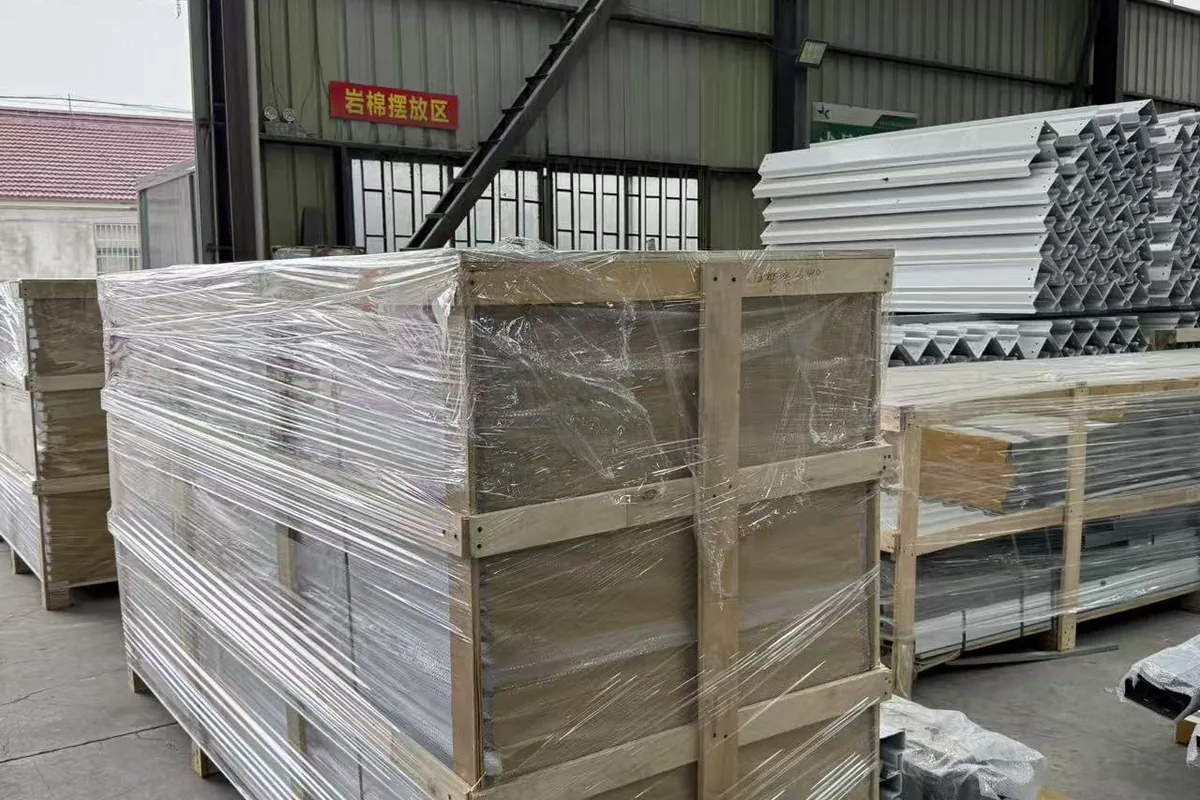
Thicker Rock Wool Panels Also Weigh More
When density is unchanged, a thicker insulation core contains more material per square metre.
For example, with an assumed rock wool density of 100 kg/m³, core weight would be:
| Thickness | Assumed Core Density | Core Weight per m² |
|---|---|---|
| 50mm | 100 kg/m³ | 5.0 kg/m² |
| 75mm | 100 kg/m³ | 7.5 kg/m² |
| 100mm | 100 kg/m³ | 10.0 kg/m² |
These figures represent only the insulation core in this example. They exclude steel facings, adhesive, joints and packaging. Actual panel weight should come from the product specification.
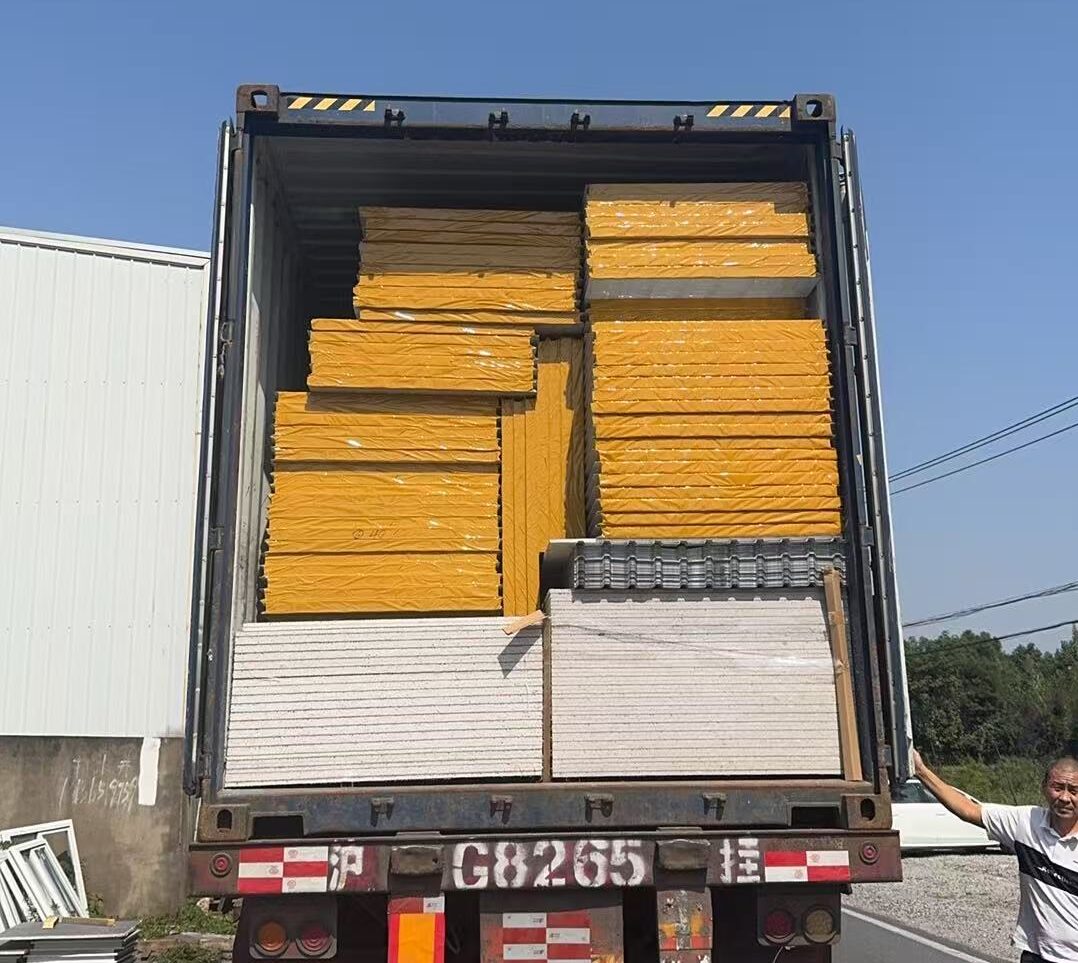
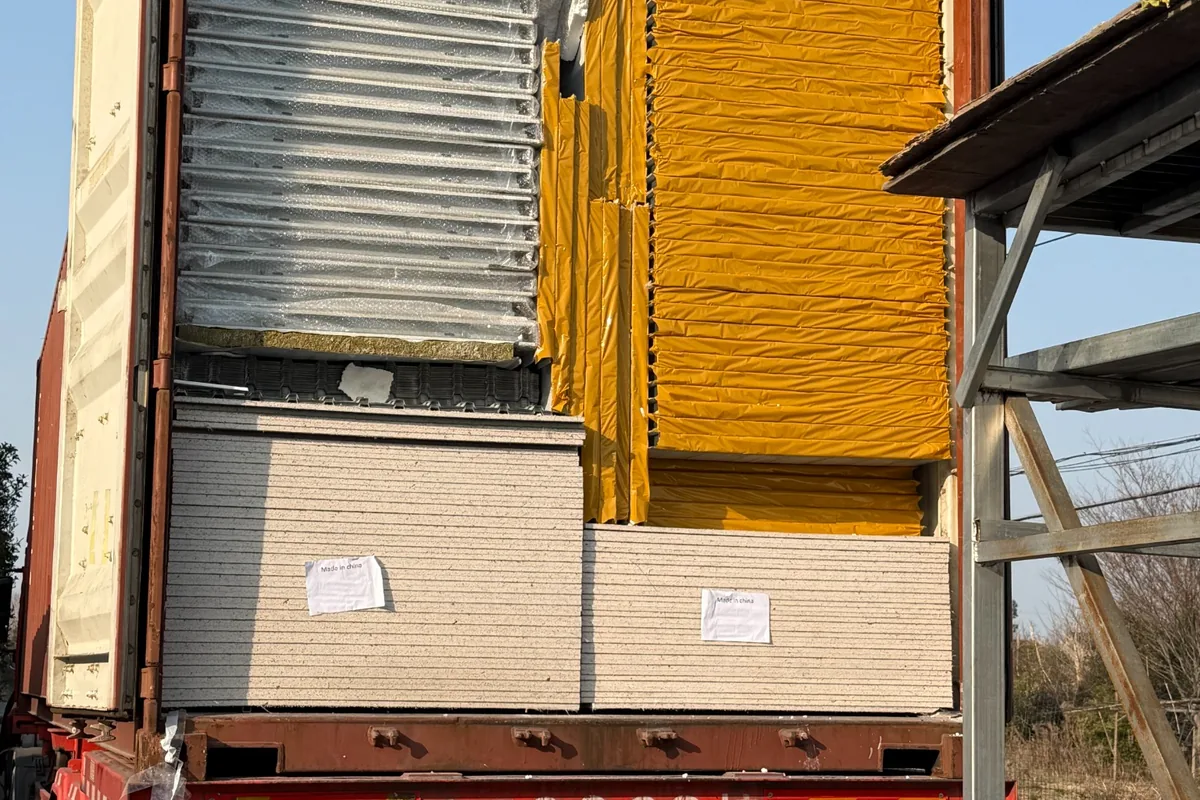
For export orders, panel thickness also affects packing volume. This can change the number of complete container houses shipped in a 40HQ container.
50mm vs 75mm vs 100mm: How Does Thickness Affect 40HQ Loading?
Hongtai’s standard flat pack container house is approximately 3.0 × 5.95 × 2.8m externally.
With a reference 50mm wall-panel configuration, approximately 18 standard sets can be planned for a 40HQ shipment.
Thicker panels occupy more packing space, but the final loading quantity also depends on the doors, windows, accessories, floors and other components.
| Wall Panel | 40HQ Loading Consideration |
|---|---|
| 50mm Rock Wool | Approximately 18 standard sets under the reference packing configuration |
| 75mm Rock Wool | Some thicker-panel packing configurations use approximately 11–14 sets; verify the exact packing plan |
| 100mm Rock Wool | Requires a project-specific loading calculation; no fixed set quantity should be assumed |
The cost per house can rise even if the ocean freight rate per 40HQ stays unchanged. Fewer units in a container mean the freight is spread over fewer houses.
Assume an illustrative ocean freight cost of USD 4,000 per 40HQ.
The freight rate and 12-set loading case are examples, not a current shipping quotation or a confirmed loading plan for this order.
In this example, reducing the loading quantity from 18 to 12 raises the freight cost per house by 50%.
For a bulk worker accommodation project, this difference should be included when comparing wall-panel upgrades.
Which Wall Panel Thickness Should You Choose?
The right choice depends on where the buildings will be installed, how long they will be used and whether they are occupied during the day, overnight or year-round.
| Project Application | Starting Option | Important Checks |
|---|---|---|
| Temporary Site Office | 50mm rock wool | Working season, climate and AC/heating needs |
| Worker Dormitory in a Mild Climate | 50mm or 75mm rock wool | Occupancy duration, roof and window specification |
| Year-Round Worker Accommodation | 75mm or 100mm for comparison | Required thermal performance and overall building envelope |
| Hot Desert Project | Compare 75mm, 100mm and alternative core materials | Roof heat gain, cooling load, glazing and air sealing |
| Cold-Climate Camp | Compare 100mm rock wool with higher-performance systems | Floor insulation, windows, heating and thermal bridges |
| Very Cold Remote Camp | Consider 100mm or 150mm PU systems where appropriate | Thermal calculations, moisture control and fire requirements |
The options above are practical starting points for technical comparison, not guarantees of thermal performance or code compliance. Building location and use alone cannot determine the required panel thickness.
What Should a Wall Panel Quotation Include?
A quotation stating only “100mm insulated wall panel” is not specific enough for a technical comparison.
Two suppliers may be offering different insulation cores, core densities, metal facings or joint profiles even when both quote 100mm.
| Specification | What to Confirm |
|---|---|
| Panel Thickness | 50mm, 75mm or 100mm nominal thickness |
| Core Material | Rock wool, PU or another specified insulation |
| Core Density | Declared density in kg/m³ |
| Thermal Data | Declared thermal conductivity and required assembly performance |
| Fire Documentation | Applicable tests, classifications and project requirements |
| Steel Facings | Thickness, coating, profile and finish |
| Wall Accessories | Joint profiles, trims, flashing and sealants |
| Roof & Floor | Insulation specifications quoted separately |
| Windows & Doors | Dimensions, glazing and frame compatibility |
| Packing | Confirmed sets per 40HQ and final packing list |
| Delivery Cost | Unit price, upgrades, accessories and agreed shipping term |
For large orders, request separate prices for 50mm, 75mm and 100mm panels using the same base container house specification.
This makes it easier to compare the wall upgrade cost without mixing in unrelated changes to doors, windows or electrical equipment.
Compare 50mm, 75mm and 100mm Wall Panel Prices
Hongtai can prepare a flat pack container house quotation with different rock wool wall-panel thicknesses and relevant packing information.
Send your project quantity, location, building use and preferred insulation specification.
What to Send Before Ordering
A project drawing or BOQ is the best starting point for an accurate quotation. If those documents are not available yet, provide the following details.
- Project location: Country, region and expected operating conditions.
- Building use: Dormitory, project office, sanitary room or other use.
- Quantity: Number of container house sets required.
- Wall specification: 50mm, 75mm or 100mm, including core material.
- Roof and floor: Required insulation specifications.
- Doors and windows: Quantity, dimensions and glazing type.
- Technical requirements: Thermal, fire or other applicable specifications.
- Delivery: Destination and preferred shipping terms.
Frequently Asked Questions
Is a 100mm wall panel twice as insulating as a 50mm panel?
For the same core material and thermal conductivity, a 100mm core has twice the nominal thermal resistance of a 50mm core. The complete building will not necessarily show the same improvement because of the roof, floor, windows and structural thermal bridges.
Is 50mm rock wool enough for a container house?
It depends on the building use, climate and required performance. A 50mm rock wool wall panel is a common standard option for temporary site buildings, but it is not suitable for every project specification.
What is the benefit of 75mm compared with 50mm?
A 75mm rock wool core has 25mm more insulation thickness. With the same core material, its nominal thermal resistance is 50% higher. Buyers should also compare upgrade price and revised packing quantity.
Is 100mm rock wool the same as 100mm PU?
No. Rock wool and polyurethane can have different thermal conductivity, density and fire performance. They must be compared using actual technical data and relevant test documentation.
Will thicker wall panels reduce the number of houses per 40HQ?
Thicker panels occupy more packing space and may reduce the number of complete house sets that fit in a 40HQ. Actual loading quantities depend on the entire packing plan and selected accessories.
Can the roof and floor insulation be upgraded as well?
Roof and floor insulation specifications can be reviewed separately from wall panels. This is especially important for projects in cold or hot climates, where the whole building envelope influences thermal performance.
Can Hongtai quote all three wall panel thicknesses?
Yes. Buyers can request comparisons of 50mm, 75mm and 100mm rock wool wall panels for flat pack container houses. Pricing and packing should be calculated for the agreed building specification and order quantity.
Which Wall Panel Is the Better Choice?
For a standard, cost-sensitive flat pack container house, 50mm rock wool is a reasonable starting specification.
A 75mm option is worth comparing when the building is occupied regularly and additional insulation is required.
For more demanding climates, 100mm rock wool and alternative insulation cores may be evaluated as part of the complete building design.
The final decision should account for insulation material, roof and floor specification, windows, fire requirements, panel cost and transport cost.
For bulk projects, compare all three thicknesses using the same base specification and ask for the corresponding 40HQ packing quantities.
Request a Container House Wall Panel Quotation
Hongtai Container House supplies flat pack container buildings for construction sites, worker accommodation and modular project facilities.
Send us the quantity, destination and preferred wall-panel thickness. We can review the technical specification and prepare a project quotation.